Redeeming the Time & Living Purposefully for God
by Jessica
Thank God for His new mercies every day. I need to improve my time management and stewardship lately. I want to be the best steward I could be with my time. I want to live my life purposefully for God every hour of life. And I know I’ve not been faithful in that lately. But you know what? Thank God it is never too late to repent. Thank God it is never too late to get back up again. I am thankful that God has been merciful in drawing me, in convicting me, and that He did not pass me over.
I read in Elisabeth Elliot’s book Passion and Purity that
Jim Elliot used to write Scripture verses on little note cards so he could use his time wisely by memorizing Scripture while waiting in line for lunch at his school’s cafeteria. Wow! Talk about redeeming the time. Rather than allowing minutes to pass idly by, he was thinking God’s thoughts after Him and etching God’s Word in his heart. Jesus said that he who is faithful in little things is faithful in greater things as well. “Take care of the pennies, and the pounds will take care of themselves.” Harvey Newcomb said, “So if we take care of the moments, the hours will take care of themselves.”
I’ve also noticed remaining idle invites temptations which otherwise would not have entered into our life. The old adage is “An idle mind is the devil’s workshop.” And the wise Charles Spurgeon aptly said, “Some temptations come to the industrious, but all temptations attack the idle.” I think of King David who committed the sin of adultery with Bathsheba, the wife of one of his most faithful servants Uriah, and how he fell into the temptation in the first place. Incidentally I just finished reading the book of II Samuel recently. Chapter 11 records for us what happened just prior to David’s sin:
In the spring of the year, the time when kings go out to battle, David sent Joab, and his servants with him, and all Israel. And they ravaged the Ammonites and besieged Rabbah. But David remained at Jerusalem.
It happened, late one afternoon, when David arose from his couch and was walking on the roof of the king’s house, that he saw from the roof a woman bathing; and the woman was very beautiful. And David sent and inquired about the woman. And one said, “Is not this Bathsheba, the daughter of Eliam, the wife of Uriah the Hittite?” So David sent messengers and took her, and she came to him, and he lay with her. (II Samuel 11:1-4)
Why did David remain at Jerusalem when there was a battle going on? It was during “the time when kings go out to battle,” but instead David stayed at home. If he had been in battle instead of wandering around walking on the roof of his house, he may not have seen Bathsheba bathing and found himself in such vulnerable situation.
Perhaps that’s why John Owen, “a Puritan of the Puritans,” wrote:
“The indulgence of one sins opens the door to further sins. The indulgence of one sin diverts the soul from the use of those means by which all other sins should be resisted.”
When we let our guards down and give in to one temptation, it also becomes harder to resist the next one facing us. Our mind is not as focused on obeying God.
I read an excellent chapter on the improvement of time in Harvey Newcomb’s book A Practical Directory for Young Christian Females that opens my eyes to see the huge loss in misusing even just one hour each day:
Our whole life is made up of moments. A little calculation may startle those who carelessly trifle away small portions of time. Suppose you waste only ten minutes at a time, six times in a day; this will make an hour. This hour is subtracted from that portion of your time which might have been devoted to active employments. Sleep, refreshment, and personal duties, generally occupy at least one half of the twenty-four hours. You have, then, lost one-twelfth of the available portion of the day. Suppose you live to the age of seventy years. Take from this the first ten years of your life. From the sixty remaining years, you will have thrown away five years! These five years are taken from that portion of time which should have been employed in the cultivation of the mind, and in the practical duties of piety!
The common excuse for neglecting the improvement of the mind and the cultivation of personal piety, is the lack of time. Were you to employ one half of this time in reading, at the rate of twenty pages an hour, you would be able to read more than eighteen thousand pages, or sixty volumes, of three hundred pages each. If you employ the other half in devotional exercises, in addition to the time you would spend in this manner, upon the supposition that these five years are lost, what an influence will it have upon your personal piety! Or, if you spend the whole of it in the active duties of Christian benevolence, how much good may you accomplish! Think what you might do by employing five years in the undivided service of your Master.
Well, there are many beneficial projects that I need to do in my current station in life and to prepare myself for the next chapters of my life. Projects that would help me in cultivating godly character. To be an obedient disciple of Christ. To be the kind of godly Christian woman God wants me to be. To be a good daughter to my parents. To be a good sister to my siblings. To be an encouraging friend to my neighbors. To be a good witness of Christ to others with my lips and actions. To impact the lives of those whom God has placed within my sphere of influence. To learn more of God and study the Scripture daily. To spend time in daily communion each day with God in prayer. To evaluate daily how I’ve lived out the day prior to retiring each night and reflect on necessary improvements. To read more edifying books. To find and exercise my spiritual gift(s) by serving faithfully in church or local Body of Christ. To learn more skills on personal finances & investments that would be useful in my financial stewardship. To make my home more efficient. To learn or practice being a good “worker at home” now. To learn more from my mother the feminine skills and domestic arts of homemaking. To cultivate the gift of hospitality. To exercise regularly in physical fitness and stay in shape.
I thank God for His provision over my life and that He never gives up on me. Praise God that He gives a new beginning even when we stumble and fall. I thank God for His forgiveness, His mercy, and that He chastises because He loves His children. And last but not least, I thank God that I can trust in Him, by His mercy and grace, to enable me to live a life more pleasing before Him, because without Him I could never do it on my own. Soli Deo gloria.
Stay-At-Home Mother’s Work Worth $138,095 a Year
by Jessica
I read a news article online yesterday that says a stay-at-home mother’s work worth is $138,095 a year. Yes, we all know that we can never put a price tag on a mother since her labor of love is priceless, but I thought it’s an interesting article, though.
I don’t know the degree of the accuracy of the figure, but I still think motherhood is the most under-rated, under-appreciated, and under-paid profession a woman can have. Yes, I do think being a mother is “real work” (especially with a child like me during my growing up years, just kidding, okay, maybe partly true
). That’s why I’m so thankful to my mother who was a stay-at-home homemaker during most of my growing up years.
Of course, I am aware there may be those who would say being a mother is not a “real job.” For example, Mrs. Teresa Heinz-Kerry, the wife of John Kerry. Back in July 2004 during the Presidential campaign, Mrs. Kerry was asked about the differences between the First Lady, Laura Bush, and herself in an interview published in the USA Today. This was her answer:
Q: You’d be different from Laura Bush?
A: “Well, you know, I don’t know Laura Bush. But she seems to be calm, and she has a sparkle in her eye, which is good. But I don’t know that she’s ever had a real job — I mean, since she’s been grown up. So her experience and her validation comes from important things, but different things.
“And I’m older, and my validation of what I do and what I believe and my experience is a little bit bigger — because I’m older, and I’ve had different experiences. And it’s not a criticism of her. It’s just, you know, what life is about.”
Mmm, Laura Bush never had a real job? As I understood, Mrs. Bush had been a librarian and schoolteacher for years. Last time I checked, those are real jobs? And, by whose standards is her validation of what she does a little bigger?
Well, in all fairness to Mrs. Kerry, she did “apologize” to Mrs. Bush later on:
“I had forgotten that Mrs. Bush had worked as a schoolteacher and librarian, and there couldn’t be a more important job than teaching our children,” Heinz Kerry said in a statement. “As someone who has been both a full-time mom and full-time in the workforce, I know we all have valuable experiences that shape who we are. I appreciate and honor Mrs. Bush’s service to the country as First Lady, and am sincerely sorry I had not remembered her important work in the past.”
Unfortunately, though, I’m not sure that Mrs. Kerry really cleared things up. Her comment only made it worse, because she left out the very important real job of a mother. Clearly Mrs. Kerry knew that Laura Bush was a stay-at-home mother, working from home and rearing her twin daughters. Mrs. Kerry was only reinforcing society’s values that place career first before family. A woman working outside the home seems to be now a form of validation of a woman’s status. Mrs. Bush’s decision to be a helpmeet to her husband and a full-time mother is a noble choice and a high calling, and one that should be celebrated and not denigrated. She is a keeper at home and a worker at home as the Bible teaches to be:
“…so train the young women to love their husbands and children, to be self-controlled, pure, working at home, kind, and submissive to their own husbands, that the word of God may not be reviled.” (Titus 2:4-5)
I’ve thought of this just a bit before. I mean, if God ever calls me to be a wife and mother one day, I just don’t know if I could ever be as excited about working for some boss to prosper his business than I do about working at home, serving my own family, and making God’s business prosper. Now, before anyone asks me what year this is
, seriously, though, the other way around doesn’t really make much sense to me. I understand there are many women out there who want to be there for their children instead of working outside the home, but due to extenuating circumstances they work temporarily. And I understand that and sympathize with them. But where at all possible, I’d want to be there for my (future) children and raise them instead of putting them in some day-care-centers. I’d want to be there for them to hear (and answer) their funny little questions, have them run to me when they’re hurt and kiss them better, instill the right values in them, and teach them about the One Who loves them and Who is sovereign in their lives. I wouldn’t want to absolve my responsibility by relegating it to others. I honestly don’t believe anyone else would do a better job being paid to do something that a mother is willing to do for free.
A career woman writes:
“I am in my early thirties, single, a corporate officer, and executive. I serve on three boards of directors, one a national organization. With all my customer contacts, employee supervision, and peer contact, my total influence doesn’t constitute a drop in the bucket to what a wife and mother contributes to society. She directly affects the mental outlook of her husband and children. She has the power to make her home heaven or hell. That’s what I call woman power.”
Well, let me close by quoting what a lady named Diane wrote when asked to describe her work. I thought it’s funny but true:
“I had a continuing program of research (what mother doesn’t?), in the laboratory and in the field (also known as indoors and out). I worked for my masters (the whole flippin’ family), and received five credits (three sons and two daughters). Of course, the job was of the most demanding in the humanities (any mother care to disagree?), and I often worked 14 hours a day (24 is more like it). But the job was more challenging than most run-of-the-mill careers and the rewards are more of a satisfaction rather than just money. Commonly known as Stay-at-Home-Mom.”
The Witty Charles Spurgeon
by Jessica
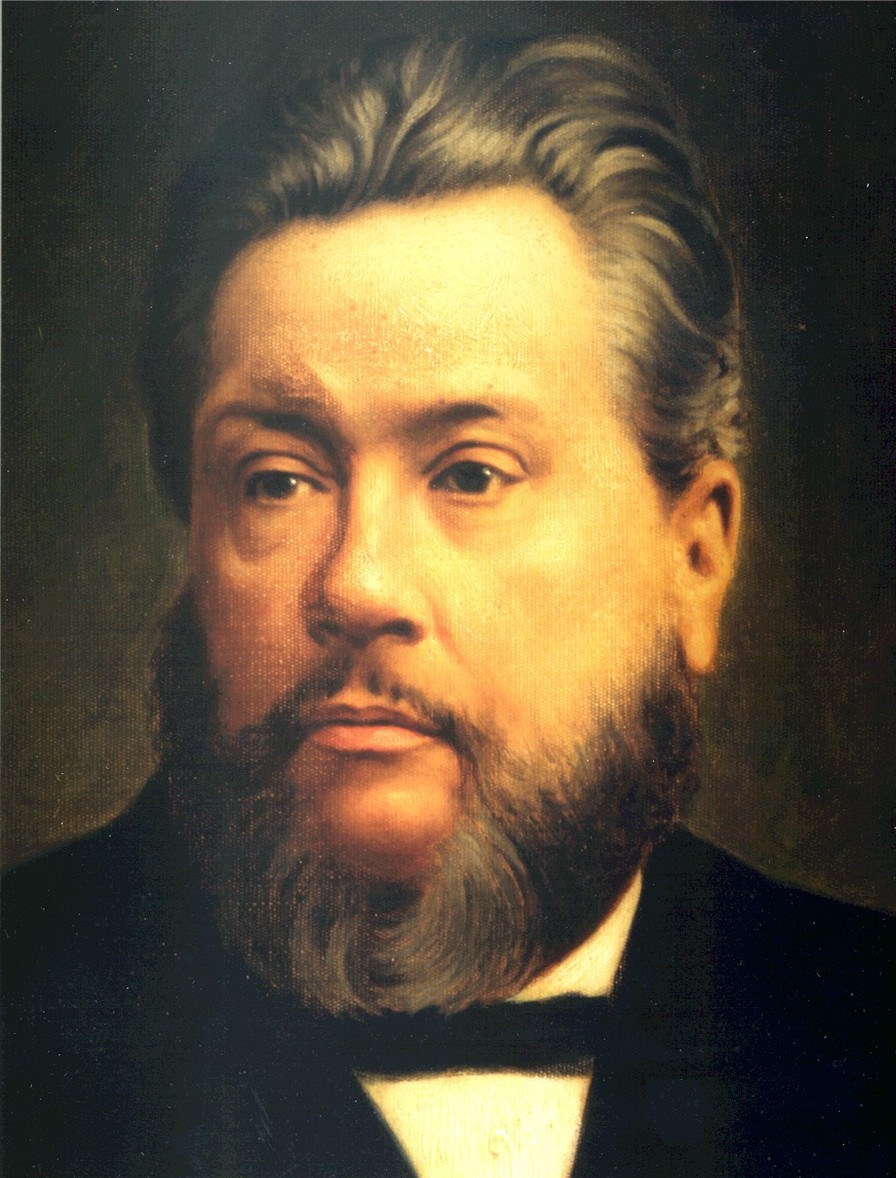
I love Charles Spurgeon! Those who know me know how much I love his writings and sermons. He’s so witty, funny, intelligent, and inspirational. I almost never fail to walk away feeling encouraged each time I read his writings. His sermons are often sprinkled with witty remarks that make me laugh because they’re both poignant and funny at the same time. His force and delivery enhance the beauty of his message. Oh, that there’s a dozen preachers like him today! After reading more of his biography, I came to love not only his great preaching ability, but also of the character and personality that Charles Spurgeon was. He must’ve been such a colorful personality. (You can read about his courtship story with his wife, Susannah, from one of my previous entries if you like.) Here are some funny quotes I found memorable from Spurgeon…
On Controversies
Charles Spurgeon was frequently embroiled in religious controversies. “I hear you are in hot water again,” a friend declared one day. “I’m not the one in hot water,” Spurgeon retorted. “The other fellows are. I’m the man who makes the water boil.”
On Criticism
Spurgeon was well-known as a cigar smoker. In his days they didn’t know about the harmful effects of excessive smoking, and for him it was mostly for medicinal reasons. He said he didn’t see anything wrong with smoking cigars as long as it wasn’t in excess. He said, “I’ll quit if I find myself smoking too much.” When asked what “too much” was, he replied, “Two at a time, of course.”
“I’m going home, and smoking a cigar to the glory of God”.
On agnosticism
A gentleman said to Spurgeon one day, “Ah! Mr. Spurgeon, I don’t agree with you about religion; I am an agnostic.” “Yes!” Spurgeon replied, “that is a Greek word, and the exact equivalent is ignoramus; if you like to claim that title, you are quite welcome to.”
On His Age
Spurgeon had the gift of preaching even as a teenager at the age of 15 or 16. This is an account of his very first effort at preaching in the pulpit. The moment he finished preaching an elderly woman cried out, “Bless your heart, how old are you?” Spurgeon replied that there should be no interruptions in the service. But as soon as the last hymn was sung she burst forth again with her question, and this time he replied, “I am under sixty.” “Yes, and under sixteen!” the lady replied. Her enthusiasm was felt to the rest of the congregation, and they demanded that Spurgeon comes back and preach to them again as soon as possible.
Ha ha ha…
That’s similar to what I’d say when someone asks for my age: “I am under sixty.”
Mmm, well… okay, I am under thirty, but that’s as specific as I’m willing to reveal.
On Punctuality
Everyone who was acquainted with Spurgeon knows how scrupulously punctual he was at all services and meetings. Unless something very unusual had detained him, he was ready to commerce either the worship or the business proceedings at the exact minute fixed. In the New Park Street days, he was unavoidably late on one occasion when he was to meet the venerable deacons. One of them, the most pompous of the whole company, who was himself noted for his punctuality, pulled out his watch, and held it up reproachfully before the young minister. Looking at it in a critical fashion, Mr. Spurgeon said, “Yes; it’s a very good watch, I have no doubt, but it is rather old fashioned, isn’t it?”
On the Ministers’ Wives
Today I just read some good quotes by Spurgeon regarding pastor’s wives. I thought I’ll throw them in here as well because they’re so true. Growing up, I’ve always gathered that people have the notion a pastor’s wife is supposed to do certain things at church; they’re expected to teach Sunday school, or lead the choir, or be the church’s organist or pianist, etc. (even though these may not necessarily correspond to their giftings). But why this non-verbal expectation? When in reality, a pastor’s wife’s primary role, first and foremost, just like any other married Christian ladies, is to be a helpmeet to her husband. Not as the church’s worker, or the church’s pianist, or choir leader. It’s nice if they do these things according to their gifts, but I don’t think we must take it for granted that they should be involved in that if they choose not to. I have a lot of respect for pastor’s wives. I think it’s a very special and honorable position. I’m sure it’s not an easy position because regrettably people often subject them to unreasonable scrutiny. Spurgeon gave good insights of the minister’s wives:
Churches do not give a married minister two salaries, one for the husband and the other for the wife; but, in many cases, they look for the services of the wife, whether they pay for them or not. The Pastor’s wife is expected to know everything about the church, and in another sense she is to know nothing of it; and she is equally blamed by some people whether she knows everything or nothing. Her duties consist in being always at home to attend to her husband and her family, and being always out, visiting other people, and doing all sorts of things for the whole church! Well, of course, that is impossible; she cannot be at everybody’s beck and call, and she cannot expect to please everybody. Her husband cannot do that, and I think he is very foolish if he tries to do it; and I am certain that, as the husband cannot please everybody, neither can the wife. There will be sure to be somebody or other who will be displeased, especially if that somebody had herself half hoped to be the minister’s wife! Difficulties arise continually in the best-regulated churches; and the position of the minister’s wife is always a very trying one. Still, I think that: if I was a Christian young woman, I would marry a Christian minister if I could, because there is an opportunity of doing so much good in helping him in his service for Christ.
And here is a beautiful description of the minister’s wife:
It is a great assistance to the cause of God to keep the minister himself in good order for his work. It is his wife’s duty to see that he is not uncomfortable at home; for, if everything there is happy, and free from care, he can give all his thoughts to his preparation for the pulpit; and the godly woman, who thus helps her husband to preach better, is herself a preacher though she never speaks in public, and she becomes to the highest degree useful to that portion of the Church of Christ which is committed to her husband’s charge.
God
by JessicaWhom have I in heaven but You?
And there is nothing on earth that I desire besides You.
My flesh and my heart may fail,
but God is the strength of my heart and my portion forever.
Hello Kitty: The Asian Attraction for the 21st Century
by JessicaWell, sometime ago my friend, Don, has written a blog entry titled How to Attract an Asian Man: A Pedantic Guide and the results have been phenomenal. I am told that lots of people have read his guide and countless people have benefited as a result. Be sure to click on the link to read his guide for free, or even if you don’t need it, you could always use some laughter for the day.
But anyway, let me spill some of the secrets here, though. According to Don (who is an Asian guy), in addition to making cutesy smiles and giggling a lot, having Hello Kitty products is now the new attraction for the 21st century Asian man. Yes, buy anything with Hello Kitty on it. A Hello Kitty cell phone cover is a must. You may want to read his guide in order to understand this.
A Hello Kitty camera. Oh, this one will come in handy when you practice Don’s third advice on making those “bunny ears” (you’ll know what I mean when you read his guide):

Hello Kitty bedding. What could be better than two happy Hello Kitty faces greeting you in the morning?

And… who can resist strumming on this cute pink Hello Kitty electric guitar. Come on, you know you want it.

And of course, introducing the new Hello Kitty Platinum Plus® Visa® credit card. Don’t leave home without it!

Okay, this is an aside. But I thought this picture is so funny. Since we all know that Asians just looove all things Hello Kitty, what do you get when you combine an Asian geek’s love for Star Wars with an Asian’s love for Hello Kitty? You get Hello Vader…

Repentance
by JessicaI’ve been following my daily Bible reading program recently and it has been such a blessing for me. I used to read through the Bible more in a random fashion before, but I think having a systematic plan of Bible reading each day has given me more focus and helped me to be more consistent in the habit.
Well, I am going through the book of I Samuel right now from the Old Testament. And it talks about the reign of King Saul over Israel. Saul was an ungodly king who did not fear God. And in chapter 15, we find that Samuel rebukes Saul for his disobedience against God’s commands. I found there are a few things that I could learn from Saul from this chapter on the subject of repentance. But it wasn’t so much a lesson on how to repent as it is a lesson in how not to repent. There are three ways that I find this passage is teaching me about the difference between true repentance versus false repentance:
1. Saul did not acknowledge that ultimately his sin is against God, and God alone.
Saul said to Samuel, “I have sinned, for I have transgressed the commandment of the Lord and your words, because I feared the people and obeyed their voice.” (I Samuel 15:24)
At first glance, it appears as if Saul had a genuine repentance. He confessed that he has sinned. But upon a second reading, though, I noticed that he didn’t just say that he sinned against God only, but also against Samuel’s words. Now, I was pondering, why did he say that? Why did he say he sinned against Samuel’s words? I mean, his response was far different from David’s confession when David prayed in brokenness to God and acknowledged, “Against you, you only, have I sinned and done what is evil in your sight.” (Psalm 51:4) David understood that ultimately it was against God’s law that he has transgressed. It was not men’s words against whom he has offended, but God. It was God’s commands.
Well, I believe that Saul said what he did because he knew that Samuel was angry with him. He knew that he had lost favor in Samuel’s eyes. And in trying to regain his favor, he unsuccessfuly attempted to appeal to Samuel’s vanity and manipulatively by saying he has transgressed against Samuel’s words, implying that they are on equal authority with God’s commands.
2. Saul did not acknowledge only God has power to forgive sins.
“Now therefore, please pardon my sin and return with me that I may worship the Lord.” (I Sam. 15:25)
Saul was asking Samuel for pardon as if Samuel can pardon his sin. Yet, it was God alone Whom Saul had sinned, and only God ultimately has the power to pardon sins. But Saul did not come to God first and foremost. Instead of kneeling before the holy God in private and in heartfelt contrition over his sin, Saul went to Samuel. I think that, likewise, sometimes we do the same thing when we are more concerned about reconciling with men than we are with God. We make peace with the church and ministers. And we regain favor in their eyes. Or we make peace with our neighbors and friends. But we do not make peace with God, unto Whom we ultimately sin against. And by this, Saul shows that his is not a true repentance.
3. Saul was grieved not because of his sin, but only for of its consequences.
Then he said, “I have sinned; yet honor me now before the elders of my people and before Israel, and return with me, that I may bow before the Lord your God.” (I Sam. 15:30)
This is a sign of hypocrisy. Saul wanted to look good before the people of Israel despite having failed in leading them according to God’s will. Thomas Watson is one of my favorite Puritan writers and he said it so aptly when he describes true repentance: “Godly sorrow shows itself to be ingenuous because when a Christian knows that he is out of the gun-shot of hell and shall never be damned, yet still he grieves for sinning against that free grace which has pardoned him.”
Here we find that Saul didn’t seem to grieve over his sin. He was more concerned at how the Israelites would perceive him. He wanted to look good before the people of Israel by having Samuel in his presence, because Samuel’s absence would’ve been a sign of God’s disfavor toward Saul before the people. He wanted the prophet of God, Samuel, to assist him in public thanksgiving before the Israelites for the victory against the Amalekites. He did not want the Israelites to think that the God of Samuel had left him. So even after having sinned, he was more concerned with his own public image than he was with his private image before almighty God. He grieved over his public image more than the fact that he has seriously offended God.
There was no sign of tearful repentance on Saul’s part. There is no brokenness over his sin. I love the following quote by Thomas Watson when he makes this analogy between true repentance vs. false repentance:
Faith lives in a broken heart. He cried out with tears, “Lord, I believe.” True faith is always in a heart bruised for sin. They, therefore, whose hearts were never touched for sin, have no faith. If a physician should tell us there was a herb that would help us against all infections, but it always grows in a watery place; if we should see a herb like it in colour, leaf, smell, blossom, but growing upon a rock, we should conclude that it was the wrong herb. So saving faith always grows in a heart humbled for sin, in a weeping eye and a tearful conscience.
Lord, please grant us a true faith. Please grant me a contrite heart that is broken over my sins. Help me to truly hate my sins. Help me to view sin the way You do in all of its heinousness. Help me to have a hatred for sin, a dread of sin, and a love for holiness.
Blogspotted
by JessicaWoo-hoo! A few days ago I found out my blog’s traffic has somewhat skyrocketed when Phil Johnson linked to my previous entry from his Pyromaniacs team blog. His is probably one of the most popular Calvinistic blogs out there (besides Tim Challies’), cause he always has interesting things to say. So I’m just humbled and thought Phil is too kind in blogspotting and briefly mentioning me in his recent entry.
Thanks so much, Phil!
Setting Hearts Aflame With Love
by Jessica
Recently, my good friend Patrick Chan made an irresistible offer to godly, available single Christian females by posting a comment in a recent post at Phil Johnson’s famed Pyromaniacs blog. (Btw, Phil is the editor for some of John MacArthur’s books.) Of course, not wishing to deprive any godly, single Christian sisters around the world from the opportunity of meeting a godly, rare, theologically Reformed, exotic (look at his silhouette pic) Asian guy like Patrick, I feel compelled to link to his comment.
This is an opportunity of a lifetime.
As Patrick’s friend and sister in Christ, I can attest to his character, and give my blessings and hearty approval, ha ha.
Also, please be sure to visit his excellent blog which he shares with his friend Charlie (they both write much better entries than I do).
(Note: Patrick, you can thank me later… and oh, be sure to check your emails more often and increase your transfer bandwidth as your blog’s traffic would skyrocket after the posting of this entry.
)
Anyway, without further ado, here are Patrick’s ten reasons why godly, available single Christian women ought to consider him:
Speaking of freedom re: whom to marry, might I please take this moment to freely offer myself to available single Christian females?
I don’t want to waste your time, so let’s get right to it. Here are 10 reasons why you should take me up on my offer:
1. I am Christian. I suppose this isn’t so much a “good reason” as it is a basic commonality one would expect to share in a Christian marriage. But sorry, I gotta put it here ‘cos otherwise this is gonna be one short list.
2. Judging by the photo on my Blogger profile, I am mysterious. Which, from a judicious perusal of the back covers of cheesy romance novels at a local Borders bookstore, ladies appear to find attractive. Well, maybe “attractive” isn’t quite the right word in my case… Be that as it may, one should always expect life should measure up to Danielle Steel.
3. I would also add I’m tall, dark, and handsome, but I think only the “dark” appellation would apply. Still, one out of three ain’t bad. In fact, in baseball, that’s a .333 average!
4. Also, I can do basic math. This probably doesn’t seem like it’d be a compelling reason. Okay, fine, I agree. See, I’m also agreeable!
5. By the way, I’m really poor at sports. I’m no athlete. I’m quite weak. Even now, I can barely throw a pitch over home plate. True, in a regular-sized baseball diamond, this is pretty hard for your average Joe. But I’m talking about Little League.
Oh, wait, how is this a good thing, you ask? I’m glad you asked! Because I’m so poor at sports, I probably won’t watch that much stuff on TV. Therefore, I’ll have more time to spend with you.
On the other hand, you may not want to be seen in public with an unathletic, weak man. Hm, I’m really not helping my case, am I?
6. Due to a childhood injury, I can’t smell all that well. Which would be both a pro as well as a con. Pro: feel free to avoid breath mints ‘cos I can’t tell anyway. Con: what if I do the same?
7. I have injuries. Sure, it may seem like I’m damaged goods. But let’s think of this in a more positive light. Perhaps I have scars because of all the horrific ordeals I’ve been through in life? Perhaps in my former life, I was a brigand and a rogue? Or a gangsta thug on the run? Or perhaps I was a really stupid, rebellious child who was jumping on a water bed when he shouldn’t have been, and thus the injury was my own fault. But why fuss over the details?
8. I’m offering myself up on a weblog. Not only on a weblog, but in the combox of a post of a weblog. You may immediately think, “Desperate”! But let’s not jump to conclusions. To look at it another way, if we snip off the last two letters of the word “Desperate” and replace it with a “d” and an “o,” we have: “Desperado.”
9. As you can probably tell from my last name, I am Asian. Which makes me exotic. And as we all know, exotic Asians are few and far between in this world. That’s what makes us exotic. Does this sound circular? Well, we are an enigmatic people. We hail from “the Far East.” Or “the Orient,” if you will. Land with lots of mist, myth, and other strange and puzzling items such as the Chinese finger trap and poorly dubbed kung fu movies. Again, that’s what makes us exotic. And, again, there are so few of us. For example, there are only about 1.5 billion of us in China.
10. Finally, let me offer up this last reason why you should consider me: because if you don’t, I will make another list which will be ten times worse than this one! Is this a threat? Oh, no, not at all! It’s simply a kind invitation for you to consider. Please? (Or I’ll really do it!)
And of course, thank you, Pyros, for starting the fire and setting my heart aflame with love.
On a serious note, though, this was a good post. Thanks, Dan, for posting it. And for putting up with the likes of me.
![]()
[Just a disclaimer, please note this entry was intended to be taken tongue-in-cheek.
]
Spurgeon’s Devotional
by JessicaCharles Spurgeon is my all-time favorite preacher. The following writing comes from Spurgeon’s Morning and Evening devotional classic and is such a good reminder for me to not merely look back to my past devotions (or simply return to the beginning stage of my spiritual growth), but to move forward and grow beyond.

“Oh that I were as in months past.”
Job 29:2
Numbers of Christians can view the past with pleasure, but regard the present with dissatisfaction;
they look back upon the days which they have passed in communing with the Lord as being the sweetest and the best they have ever known, but as to the present, it is clad in a sable garb of gloom and dreariness. Once they lived near to Jesus, but now they feel that they have wandered from him, and they say, “O that I were as in months past!” They complain that they have lost their evidences, or that they have not present peace of mind, or that they have no enjoyment in the means of grace, or that conscience is not so tender, or that they have not so much zeal for God’s glory. The causes of this mournful state of things are manifold. It may arise through a comparative neglect of prayer, for a neglected closet is the beginning of all spiritual decline. Or it may be the result of idolatry. The heart has been occupied with something else, more than with God; the affections have been set on the things of earth, instead of the things of heaven. A jealous God will not be content with a divided heart; he must be loved first and best. He will withdraw the sunshine of his presence from a cold, wandering heart. Or the cause may be found in self-confidence and self-righteousness. Pride is busy in the heart, and self is exalted instead of lying low at the foot of the cross. Christian, if you are not now as you “were in months past,” do not rest satisfied with wishing for a return of former happiness, but go at once to seek your Master, and tell him your sad state. Ask his grace and strength to help you to walk more closely with him; humble yourself before him, and he will lift you up, and give you yet again to enjoy the light of his countenance. Do not sit down to sigh and lament; while the beloved Physician lives there is hope, nay there is a certainty of recovery for the worst cases.
The Reason For My Life
by Jessica
I have a new book I really like recently titled Walking From East to West: God in the Shadows. It’s an autobiography of Dr. Ravi Zacharias, who is a world-renowned Christian thinker and apologist. I sat reading this book just this past summer under the uncomfortable heat and humidity of a 3-digit temperature, but finished it in only 2 days because it is a page-turner. Ravi has a gift with words and the ability to use them in a way that generates wonder in the mind of his readers and listeners. It was interesting to learn more about the culture of South Asia, particularly India, where Ravi was born and grew up in for the first 20 years of his life. I learned about his personal childhood days, his family and how they shaped him into the person he is today, his arrival to the United States, his courtship with his now wife, etc. However, in light of the book’s title, Ravi not only shares with us of his geographical journey “walking from East to West,” but also more importantly, of his spiritual journey: a journey out of the “City of Destruction” (the place we once were in prior to our conversion) and how God graciously placed him (and continues to keep him) on the path toward His “Celestial City.”
Prior to his conversion, Ravi’s life had been punctuated by one failure after another (especially in his studies), which often resulted to his being the object of his father’s wrath. In fact, his father was so greatly disappointed in him that he declared Ravi’s life to be a complete failure early on. Ravi also shares of his suicide attempt during the lowest points of his life–a tragic choice that very nearly brought him to an end. After becoming a Christian, though, his life drastically and radically changed. One day he was “a creature of despair, irresponsibility, and failure.” Then he became a creature of hope, diligent and accomplished in the things to which he set his hand. He discovered a lifelong passion and discipline of study. It was indeed the work of God in Ravi’s life. The following is one of my favorite quotes from the book:
Along with everyone else, I wondered how such a turnaround could have taken place, and so swiftly. The key was that now I look at life through a window of meaning. And that was the one thing I had been desperately longing for: meaning. Now everything in my life was packed with it: my studies had a meaning, my family had a meaning, my friendships had meaning, my sports had meaning.
All the things I had thought were the causes of my despair–my failing studies, my senseless wandering, my hopelessness–had actually been the results of my despair. The Austrian concentration camp survivor Viktor Frankl wrote, “Without meaning, nothing else matters. With meaning, everything else falls into place.” If you can’t see the why, you cannot live for the what. And as soon as I was able to answer the “why,” even my failures began to make sense. (pp. 118-119)
The above quote rings so true for me because life becomes so meaningful and fulfilling when I realize God is the Reason for my life. He is the answer to the why. Perhaps that’s why Augustine himself wrote in his autobiography Confessions, “…for Thou madest us for Thyself, and our heart is restless, until it repose in Thee.” As I look back through my life, I can remember that the times I was happiest and most content were when I placed God #1 in my life and when I passionately sought Him first as my ultimate Source of joy and help. Everything else in life (including the mundane, the trivial, and the temporal) becomes meaningful and carries an eternal value because I do them in relation to God, His will, His purpose, or how they may glorify Him. Even in something as simple as seeing the beautiful handiwork of creation such as the sunset or the clear blue sky, I can say, “Hey, I know the Master Artist and Creator of that!” In reverse, those times when I felt unfulfilled and unhappy were when I stepped out of God’s will or when I had placed something else in priority over Him.
Lord, please grant me a sincere heart of repentance. Please help me to always put You #1 in my life. Help me so I may never again allow anything in this world to take up Your place in my heart and life. Please mold me to become the kind of godly woman that You want me to be. Help me to live every single hour of my life with You in mind, for Your purpose, and to Your glory. You are the Reason for my life. And You alone are sufficient.
Some passages I need to continually meditate on and live out:
- “So, whether you eat or drink, or whatever you do, do all to the glory of God.” (1 Corinthians 10:31)
- “Brothers, I do not consider that I have made it my own. But one thing I do: forgetting what lies behind and straining forward to what lies ahead, I press on toward the goal for the prize of the upward call of God in Christ Jesus.” (Philippians 3:13-14)
- “Whatever you do, work heartily, as for the Lord and not for men, knowing that from the Lord you will receive the inheritance as your reward. You are serving the Lord Christ.” (Colossians 3:23-24)
- “The Lord is my light and my salvation;
whom shall I fear?
The Lord is the stronghold of my life;
of whom shall I be afraid?” (Psalm 27:1)